Sitemaps: Are They Still Relevant for SEO in 2026?
Master XML and HTML sitemaps and find out why they are still a critical part of any technical SEO strategy for fast crawling and indexing.
What is a Sitemap?
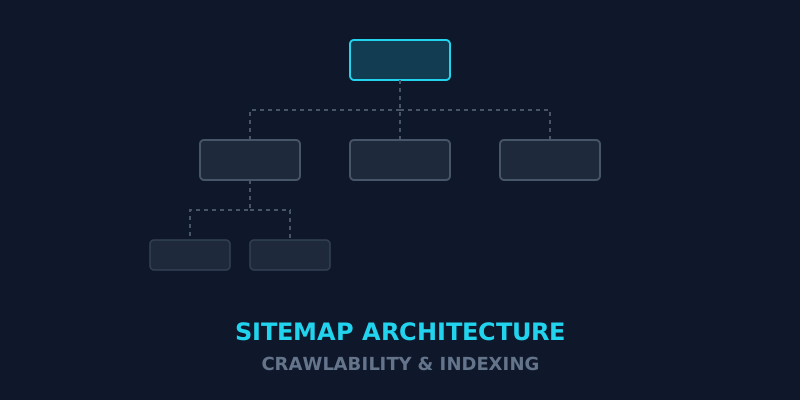
A sitemap is essentially a "roadmap" of your website that lists your most important pages. Its primary purpose is to help search engines like Google discover, crawl, and index your content more efficiently.
As websites have become larger and more complex, some have wondered if sitemaps are still relevant. The short answer is: Yes, now more than ever.
1. XML Sitemaps (For Search Engine Bots)
XML sitemaps are specifically designed for search engine crawlers. They are structured files that tell bots exactly how many pages you have, when they were last updated, and how important they are relative to other pages on your site.
Why you still need them:
- New Sites: If your site is brand new and has few internal links, Googlebot may not find it. A sitemap is the best way to "force" that initial discovery.
- Large Sites: If you have 500+ pages, a sitemap ensures that Googlebot doesn't miss anything.
- Rich Media: Dedicated sitemaps for Images and Videos can help you rank in Google Images and Video Search.
2. HTML Sitemaps (For Your Users)
An HTML sitemap is a regular webpage that lists all the main pages of your site, usually in a logical hierarchy.
While XML sitemaps are for the "bots," HTML sitemaps are for the "humans." They provide a fallback navigation option if a user gets lost and also help search engines understand your site's architecture better. In 2026, having both is still considered an SEO best practice.
3. Best Practices for Sitemap Optimization
- Only Include SEO-Relevant Pages: Do not include login pages, thank-you pages, or pages with a
noindextag. - Keep it Small: A single XML sitemap should not exceed 50,000 URLs or 50MB in size. If your site is larger, use a "Sitemap Index" file to point to multiple smaller sitemaps.
- Submit to Search Console: Once you’ve created your sitemap, your most important step is to submit its URL to Google Search Console and Bing Webmaster Tools.
- Use Absolute URLs: Every link in your sitemap must start with
https://and include your full domain.
Final Thoughts
A sitemap isn’t just a simple list of links—it’s a powerful technical SEO tool that controls how search engines perceive the structure of your site. By following these best practices, you are ensuring that your new content is discovered and indexed as fast as possible.
Want to see if your site is being crawled correctly? Audit your technical SEO here to detect indexing barriers and optimize your site’s visibility today.
Ready to optimize your site?
Use our professional tools to analyze your source code and technical SEO health in seconds.
Start for Free →