Internal Linking Strategies for High-Authority Tool Websites
Learn how to build a powerful internal linking system to pass link juice from your blog posts to your main analysis tools for higher rankings.
ViewPageSource Team June 25, 2026
What is 'Link Juice' (and why you need it)
In the world of SEO, "link juice" (also known as link equity) refers to the value or authority passed from one page to another through hyperlinks. When a page with high authority links to another page, it sends a signal to search engines that the second page is also valuable.
For tool-based websites like ViewPageSource, the goal is to pass that authority from your informational blog content (which is easier to rank) to your high-value analysis tools.
1. The Power of Silo Structure
A Silo structure is a method of organizing your website's content into different categories or "silos" to establish topical authority.
When you write a deep-dive article on a technical topic, you should always link back to a relevant tool on your site using descriptive anchor text. For example, an article about robots.txt should naturally point to your Website Analyzer with anchor text like "audit your robots.txt file here."
2. Using Anchor Text Wisely
Anchor text is the clickable text in a hyperlink. It is one of the most powerful signals Google uses to understand what the target page is about.
Branded Anchors: ViewPageSource (use these for about/contact pages)
Generic Anchors: Click here, Read more (avoid these!)
Descriptive/Expert Anchors: Source Code Viewer, Schema Generator, Security Header Audit (these are the gold standard for tool-based sites)
3. Best Practices for Tool Sites
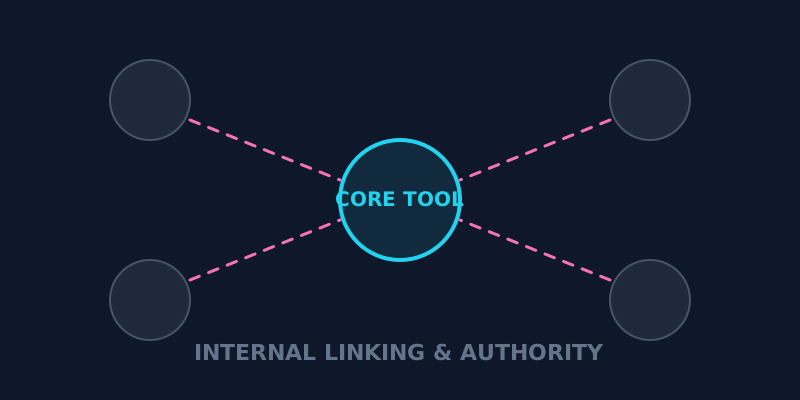
The 'Hub and Spoke' Model
Think of your main tool as the "Hub" and your blog posts as the "Spokes".
Information Spoke: How to read HTML source code.
Authority Spoke: Why the canonical tag is critical.
Internal Link: Both of these "spokes" should link directly to the Source Code Viewer (the "Hub").
This concentration of internal links signals to Google that the Hub is the most important page on the site for that topic.
Final Thoughts
Internal linking is the most overlooked strategy in modern SEO. By being strategic with how you connect your content, you can rank higher for your most competitive keywords and provide a better experience for your users.
Want to see how your site's internal links are working? Analyze your technical SEO here to identify linking opportunities and boost your domain authority today.
Ready to optimize your site?
Use our professional tools to analyze your source code and technical SEO health in seconds.