What is a Content Security Policy (CSP) and Why You Need One
Learn how to prevent Cross-Site Scripting (XSS) and other injection attacks by implementing a robust Content Security Policy on your website.
ViewPageSource Team July 3, 2026
Preventing XSS with Content Security Policy
Content Security Policy (CSP) is a powerful security layer that helps detect and mitigate certain types of attacks, including Cross-Site Scripting (XSS) and data injection attacks. These attacks are used for everything from data theft to site defacement and malware distribution.
How CSP Works
At its core, a CSP tells the browser which sources of content are trusted. Instead of blindly executing any script or loading any image the server sends, the browser checks the CSP header first. If a resource isn't on the "whitelist," the browser blocks it.
Why You Need One
Stop XSS in its Tracks: Even if an attacker finds a way to inject a <script> tag into your page, the browser will refuse to run it unless it matches your CSP rules.
Prevent Clickjacking: Use frame-ancestors to control where your site can be embedded.
Control Resource Loading: You can specify exactly which domains are allowed to serve images, fonts, styles, and scripts.
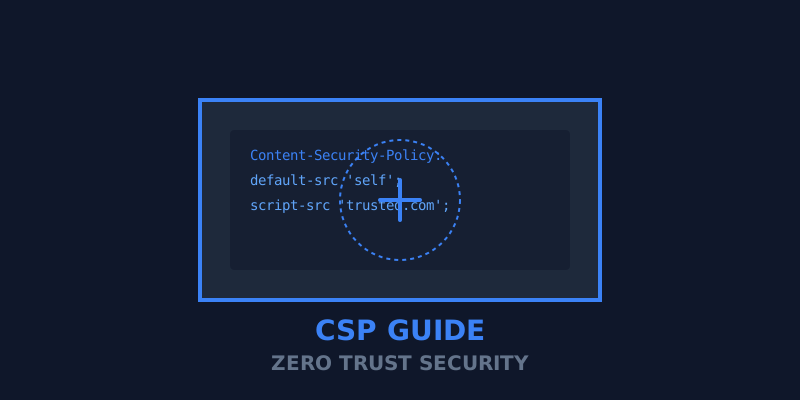
In this example:
- default-src 'self': Allows everything from your own domain.
- script-src 'self' https://trustedscripts.example.com: Allows scripts from your domain and one specific external domain.
- object-src 'none': Disallows plugins like Flash.
Monitoring Violations
You can use report-uri or report-to directives to have the browser send a JSON report whenever your policy is violated. This is crucial for debugging your CSP before making it "strict."
Implementing a CSP is one of the single most effective steps you can take to secure your frontend. While it requires careful configuration to avoid breaking functionality, the security benefits are immense. Use ViewPageSource to audit your existing policy and find gaps!
Ready to optimize your site?
Use our professional tools to analyze your source code and technical SEO health in seconds.